



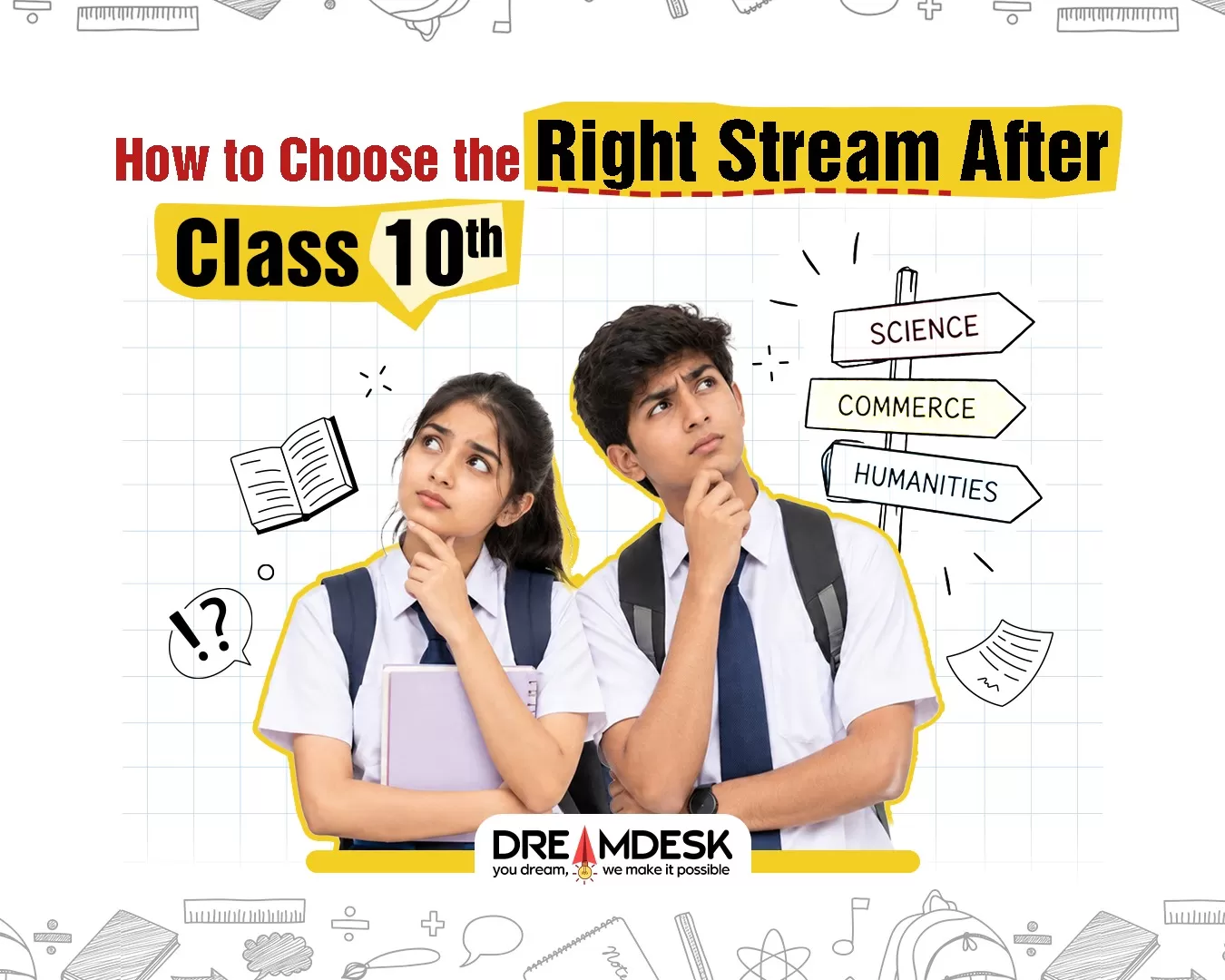
How to Choose the Right Stream After Class 10: Science, Commerce or Arts?
Every year, around this time, the same question comes up at dinner tables across the country: Science, Commerce, or Arts? It feels like a decision that will define your whole life. That pressure alone can make anyone freeze. But here's the truth: the right stream isn't the "best" one. It's the one that fits how you think and what you enjoy.
Why this feels bigger than it is
Old assumptions still linger. Science was seen as the stream for "toppers." Commerce, the safe and practical choice. Arts, the fallback option. None of that holds up anymore. Some of today's fastest-growing careers - UX design, policy research, content strategy come from Arts and Commerce backgrounds, not just Science. Choosing a stream isn't choosing your final job. It's choosing the toolkit you'll build your options with over the next two years.
Start with how you think, not what you're "supposed" to pick
Before comparing subjects, ask yourself a few honest questions:
● Do you like problems with fixed, logical answers, or open-ended questions with room to interpret?
● Are you drawn to numbers and patterns, or to people and ideas?
● Do you get curious about how things work, or about why people behave the way they do?
There's no wrong answer. A student who loves biology but hates physics numericals might actually fit better in a Commerce-linked healthcare career than in pure medicine.
What each stream actually opens up
Science (PCM/PCB) keeps the widest doors open if you're still unsure of your direction. It leads to engineering, medicine, research, and data-driven fields. But it demands steady effort in every subject, even the ones you don't enjoy.
Commerce is far more varied than most people think. Beyond the well-known CA and banking path, it opens doors to business analytics, entrepreneurship, digital marketing, and law through combined degree options.
Arts and Humanities gets underestimated far too often. It's the stream behind psychology, journalism, design, civil services, and international relations. It's also behind newer roles like
user research in tech companies. If your strength is communication or creative thinking, this stream deserves real consideration, not just a backup plan.
The mistake most students make
The real mistake isn't picking "the wrong stream." It's picking a stream because a friend chose it, a relative suggested it, or it sounds impressive at family gatherings. A stream chosen under pressure, without matching your actual interests, tends to show its cracks by the second year. Not immediately. Gradually.
A better way to decide
A structured psychometric or aptitude test can show you real data about your strengths: logical reasoning, verbal ability, numerical comfort, or creative thinking. That beats guessing or following peer pressure. Pair that data with an honest talk about your real interests, not just your marks, and you get a far more confident decision.
This is exactly the gap DreamDesk's career counselling sessions close. We don't tell a student what to choose. Our counsellors use assessment-based conversations to help each student and their parents reach a decision that actually fits. One that still feels right two years later, not just on results day.
Stuck between streams this month? Don't wait for the admission deadline to force a rushed choice. One counselling session now can save you two years of second-guessing later.
Reach out to DreamDesk and book an assessment before the new session locks you into a path you're unsure about.
Quick answers to common questions
Can I switch streams later if I choose wrong? It's possible, but harder after Class 11 begins. Most switches happen smoothly only right at the start, before subjects build on each other.
Does Arts limit my future options? No. Many high-paying, fast-growing careers today, from design to policy to research, come from an Arts background. It's not a lesser choice.
Is a psychometric test really useful, or just marketing? A good one measures real patterns in how you think and solve problems. It won't decide for you, but it gives you solid data instead of a guess.
