



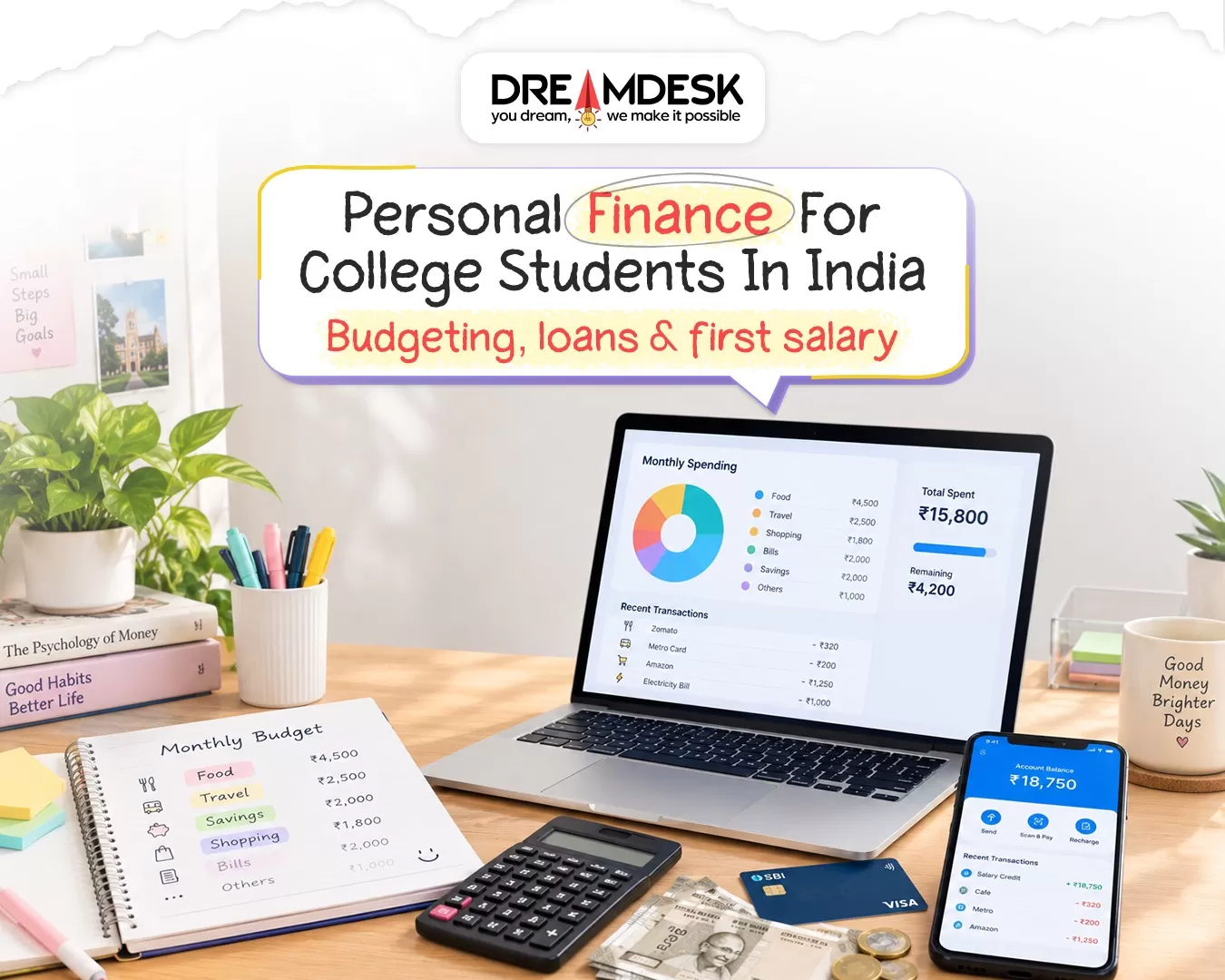
Personal Finance for College Students in India: Budgeting, Loans & First Salary
Quick question - do you actually know what your monthly college expenses add up to? Most students don't. And that's not their fault. Schools teach algebra and history, but almost nobody teaches how to manage money. This gap follows students straight into adulthood, often with costly consequences.
The Real Problem: India's Financial Literacy Gap
Here's a number that should worry every parent and student: only around 27% of India's population is considered financially literate. Among college students specifically, that number drops even lower; one study found just 16.7% of students have basic financial knowledge. Another academic study measuring students on a standard financial literacy scale found scores averaging below 60% of the maximum, meaning most students struggle with basics like compound interest, inflation, and diversification.
This isn't about intelligence. It's about exposure. Most students simply never had anyone explain these concepts in a practical, relatable way.
Why This Matters More Than Ever
Today's college students have easier access to credit cards, "buy now pay later" apps, and instant loans than any previous generation. Without basic money skills, this access becomes a trap rather than a tool. Understanding money early can mean the difference between graduating debt-free and starting your career already buried in avoidable debt.
Budgeting: The First Skill Every Student Needs
You don't need a finance degree to budget well. Try this simple rule:
● 50% for needs — hostel fees, food, transport
● 30% for wants — outings, subscriptions, shopping
● 20% for savings — even ₹500 a month builds a habit
The goal isn't perfection. It's consistency. Tracking your spending for just one month, using a simple notes app or spreadsheet, reveals surprising patterns most students never noticed before.
Student Loans: Borrow Smart, Not Just Fast
Before taking an education loan, ask yourself:
- What is the actual interest rate, and is it fixed or floating?
- Is there a moratorium period (time before repayment starts)?
- Do my course and college qualify for interest subsidy schemes?
Comparing two or three loan options before signing anything can save lakhs of rupees over the loan's lifetime. Many students sign the first offer their college suggests, without ever comparing terms.
Preparing for Your First Salary
Your first paycheck feels like freedom - but it's also where bad habits often begin. A few smart habits to build early:
● Set up a separate savings account before your first salary even arrives.
● Learn the basics of tax-saving investments (even a small SIP counts).
● Avoid lifestyle inflation - just because you can spend more doesn't mean you should.
Closing the Gap
India's central bank has been steadily improving financial inclusion, but access to a bank account isn't the same as financial literacy. Real change happens when students are taught these skills early, in a practical and relatable way, rather than through dry theory.
This is exactly the gap platforms like Dreamdesk aim to fill, helping students understand not just which career or course to choose, but how to manage the financial side of that decision, from education loans to planning their first salary wisely.
Final Thought
Financial literacy isn't a "nice to have" skill anymore; it's survival knowledge for modern adulthood. The earlier you start, the fewer expensive mistakes you'll make later.
Sources referenced:
● Journal of Informatics Education and Research — Financial Literacy Among College Students
● ResearchGate — The Financial Literacy of College Students: Evidence From India
● Business Standard — S&P Global Financial Literacy Survey findings for India
